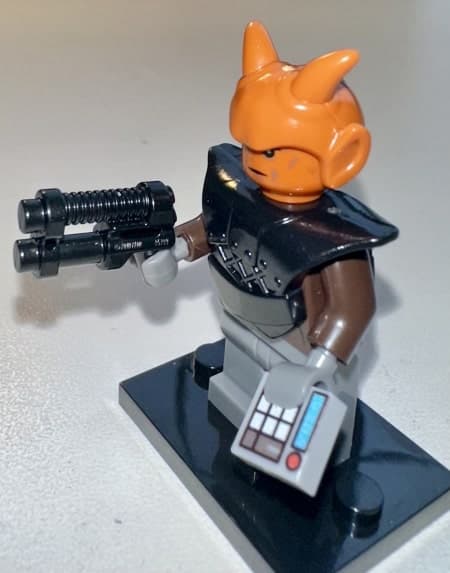
Crime Boss
DR 4Humanoid · Medium·Recommended levels: 6-12
Abilities
Saves
- WIS +6
- CHA +8
Skills
- Intimidation +7
- Persuasion +7
- Insight +6
- Deception +7
- Perception +5
Languages
- Basic
Equipment
Traits
All allied underworld units of the Crime Boss’s choice within 30 feet gain a +1 bonus to attack rolls and saving throws while the Crime Boss is conscious.
Once per round as a Reaction, when a creature the Crime Boss can see within 60 feet declares an attack or ability use, the Crime Boss may impose Disadvantage on that roll by invoking threats, hostages, or unseen consequences. The creature must be able to hear or understand the Crime Boss.
The first time the Crime Boss would be reduced to 0 HP, it instead drops to 1 HP and immediately moves up to its speed without provoking opportunity attacks.
The Crime Boss cannot be surprised.
The Crime Boss's body has been hardened through battle. They gain an additional +2 HP per level.
Actions
Lore
Crime Bosses are the architects of the underworld. They don’t patrol streets or collect debts themselves — they decide who does, when, and what happens if they fail. A Crime Boss survives not because they’re the best fighter in the room, but because the room belongs to them.
In SWURPG campaigns, a Crime Boss represents power expressed through influence. They control crews, fixers, slicers, and mercenaries; they own safehouses, bribe officials, and decide which problems are solved quietly and which become examples. When heroes cross a Crime Boss, the consequences ripple outward: prices rise, doors close, allies disappear.
Crime Bosses rarely appear alone or unprepared. Meetings happen in protected environments with escape routes, layered security, and leverage close at hand. Even when cornered, a Crime Boss is dangerous — because violence is only one of many tools available to them.
Defeating a Crime Boss should feel like dismantling a network. Killing them may solve the immediate problem, but it almost always creates a vacuum that something worse is eager to fill.
In Play
Crime Bosses do not rush into combat. They open encounters with conversation, threats, or deals, buying time for allies to position themselves. Use Commanding Underworld Presence to make nearby enforcers, mercenaries, or lieutenants immediately more dangerous.
Leverage is the Crime Boss’s signature weapon. Use it to disrupt critical player actions at pivotal moments — stopping a finishing blow, interrupting a Force power, or forcing hesitation when civilians or allies are at risk.
If violence breaks out, the Crime Boss stays behind cover and lets others fight, using a heavy blaster pistol only when necessary. Prepared Escape should trigger at a dramatic turning point, transforming what looks like victory into a chase, standoff, or multi-stage encounter.
A Crime Boss should never feel like a fair fight. They control the room, the narrative, and the aftermath — even when they lose.
Adventure Hooks
- The Meeting — The party is summoned to negotiate with a Crime Boss who claims to have leverage over one of their allies. The meeting is a trap — but walking away has consequences.
- Pulling the Thread — Every underworld problem the party has faced traces back to one Crime Boss. Taking them down means dismantling their crews, safehouses, and political protection first.
- Vacuum of Power — After the Crime Boss falls, rival factions rush to seize territory. The heroes must decide who — if anyone — should inherit control.