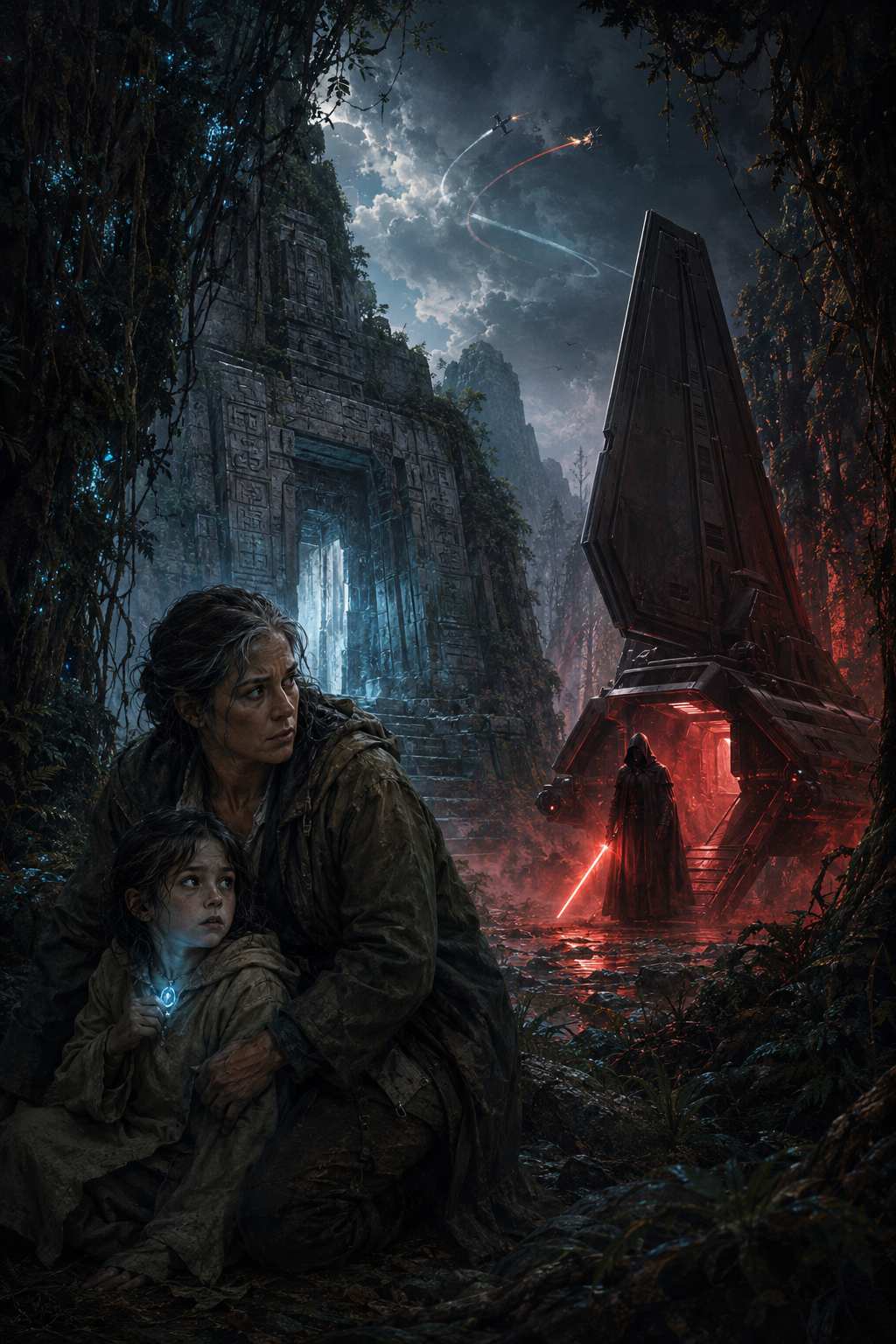
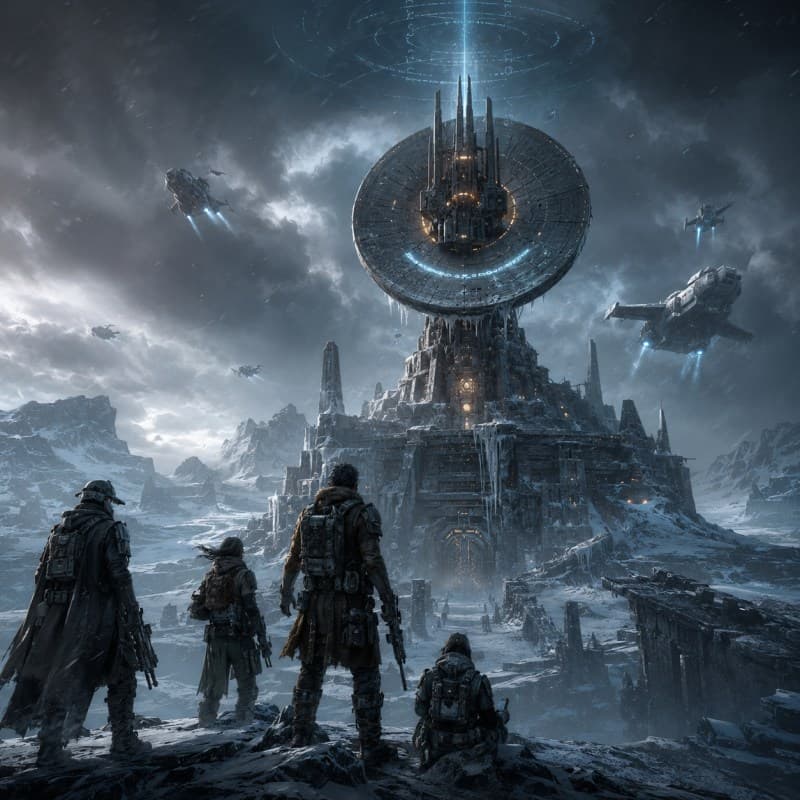
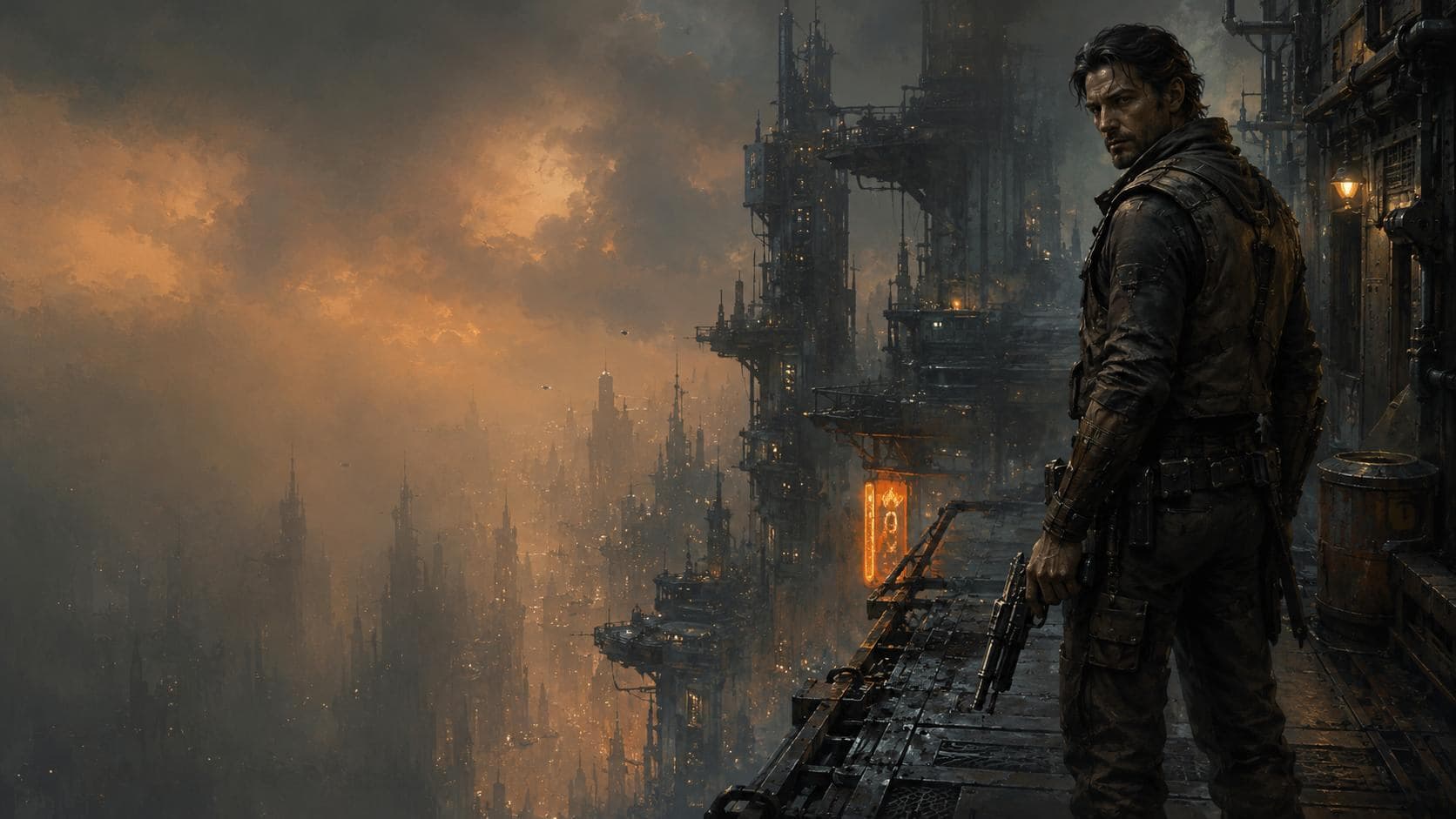
Running an Adventure — Player + GM Guide
The cards above link to specific adventures. The rest of this page is the how — what an adventure module is, how to read one, how to run an encounter, and how to pace a session. Bookmark it; it applies to every adventure on the site.
A SWURPG adventure is a complete pre-built story you can run at the table. Each one comes with a player landing page on this site (the overview you share with your group) and a downloadable PDF with the full scene-by-scene content. Players read the landing page; the GM reads the PDF.
If you've never played a TTRPG before, an adventure is a great starting point. You don't need to invent a story; just pick one, hand the player landing page to your friends, download the PDF, and run it. The PDF is intended for the GM — players should stick to the landing page so they don't spoil the surprises.
How a SWURPG adventure is structured
Every adventure follows the same general shape:
- Player overview (this site). Title, tagline, recommended party, themes, tone, hooks for the pre-made characters, a short pitch your players can read without spoilers, and a download link for the adventure PDF.
- adventure PDF (downloadable). The full adventure: synopsis, the real story behind the hook, scene-by-scene play across 3 acts, NPCs with stat blocks, an encounter reference table, multiple endings, and a leveling note for the end.
The split keeps spoilers out of the player URL — share the landing page freely, keep the PDF on your own machine.
What's inside a typical adventure PDF
In rough order:
- Synopsis — the whole adventure in 200 words.
- The Real Story — what's actually going on (different from what the players think).
- How the Party Met — concrete options for explaining how the PCs ended up working together.
- The Hook — read-aloud opening text and the first scene.
- Acts I, II, III — scene-by-scene play, with locations, encounters, decision points, and pacing notes.
- Cast of NPCs — each one with motivations, voice, dialogue, and a stat block in the same format as our Monsters & NPCs library.
- Encounter Reference — a quick-look index of every encounter.
- Conclusion — multiple endings, aftermath, and sequel hooks.
- Leveling Note — finishing the adventure typically advances the party one level.
Era-agnostic by design
Our adventures avoid era-specific factions (Empire, Sith, Rebels, First Order) wherever possible. They use timeless elements — frontier moons, abandoned facilities, pirates and salvage gangs, neutral brokers, and ordinary people in danger — so the same story plays out cleanly in the Old Republic, the High Republic, the Galactic Civil War, or the Legacy era. The GM picks the era at the table; the prose works regardless.
If your character uses the Force, the adventure references that conditionally — no Jedi Order, no Sith, just a Force-sensitive PC doing what they do. The GM frames the larger Force context for whatever campaign era they've chosen.
Pairing with the pre-made character bank
Adventures drop into the Pre-Made Characters bank without setup. Each adventure ships with a recommended party — typically a default of 4 from the bank with notes on how to scale up to 6 or down to 2. New players can claim a pre-made in one click and start playing the same evening.
How to Run an Adventure
If this is your first time running a TTRPG, this section is the one to bookmark. The advice here applies to any SWURPG adventure, not just our specific modules.
How to Run an Encounter
Encounters are the basic building blocks of any session — combat scenes, social negotiations, exploration challenges, puzzles. Every encounter follows the same loop.
Steps
- Set the scene. Read the boxed read-aloud text aloud to the players. Describe what they see, hear, smell, and feel. Keep it under 30 seconds — long enough to ground them, short enough to hand the floor back.
- Roll initiative if it's combat. Each PC rolls d20 + DEX mod (and any class bonuses). NPCs are listed in the encounter block with pre-rolled initiative or a fixed number — your call. Highest goes first.
- For non-combat encounters, call for the appropriate skill checks when uncertainty arises. A guard asks a question? Persuasion or Deception. A console needs slicing? Use Computer. Always set a Difficulty Class (DC) — see the ladder below.
- Run rounds. On each PC's turn they get 1 Action, 1 Bonus Action (only if their class trait unlocks one), and 1 Reaction (off-turn). They can also move up to their Speed.
- Adjudicate creativity. When a player tries something that's not in the rules — climbing a wall, swinging from a chandelier, distracting a guard with a thrown chair — ask which skill best fits, set a DC (typically 10/15/20), and let them roll.
- Track resources. HP, Force Points (FP), Heroic Surge Points, ammunition. Update them in real time so players see the cost of their choices.
- Resolve. Encounters end with a clear outcome — success, failure, or partial. Move to the next scene.
The DC Ladder
| Difficulty | DC | When to use |
|---|---|---|
| Easy | 10 | The PC has training and conditions are favorable |
| Medium | 15 | Default for uncertain outcomes |
| Hard | 20 | Genuine risk, lacking training, or under stress |
| Heroic | 25 | A reach — usually with a meaningful penalty for failure |
When in doubt, set DC 15 and adjust by ±2 for advantage/disadvantage of circumstance.
Considerations
- Stick to the rules where you can. Consistency builds trust. When a player asks "did I just hit a 14 on AC 13?", the answer is yes — even if the boss fight ends faster than you wanted.
- But allow creativity. When a player wants to try something fun and unexpected, say yes — and use a skill check to contain it. Skill checks are the boundary that turns "I do a thing" into "I attempt a thing." The dice make it real.
- Pacing matters more than realism. If combat drags past 4 rounds and the outcome feels decided, narrate the remaining enemies' attacks fast and focus on PC moments. Combat should feel like a movie scene, not a chess match.
- Skill checks contain creativity. A player wants to talk a guard into letting them pass? Persuasion DC 15. A player wants to leap onto a crashing speeder? Athletics DC 18. The roll is the boundary.
Ad-hoc decision making
You will not have time to look up every rule mid-session. Don't try. Instead:
- When unsure of a rule, decide quickly and move on. Look it up later and correct course next session.
- When unsure of an outcome, ask: what's the most fun result? That's almost always right. Failure should mean something interesting happens — not just "you fall off the wall and lose 1d4 HP."
- When players surprise you, lean in. Their creativity is the engine of the story. If a player figures out a clever way to bypass an encounter you spent 30 minutes designing, that's a win — not a problem. Reward it.
- When you make up something on the spot, tell the players. "I'm calling this Persuasion DC 16 — fight me later if you think I'm wrong" is a perfectly reasonable thing to say at the table. It builds trust.
How the Party Met (general framings)
Every adventure has a moment in scene one where the party comes together. If your players are using pre-made characters who don't already know each other, pick one of these framings and run with it:
- The Patron Hired All of You (default — easiest for new groups). The patron posted a public contract. Each PC saw it independently and showed up. Brief intros over drinks; the patron meets the assembled crew.
- You're Already a Crew. The PCs are an established freelance group, working out of a small leased office. The adventure starts with them taking the contract together.
- Met In Transit. The PCs were on the same long-haul transport for unrelated reasons; the contract emerges mid-flight.
- Personal Connection. One PC was approached directly because the patron trusted them; that PC recruited the others.
The adventure PDF for any specific adventure expands this with per-pre-made character hook tie-ins — it tells you exactly how each named character from the bank ended up at the meeting.
Heroic Surge usage
Heroic Surge is an optional metacurrency some tables use. If your campaign uses it, here's how to bake it into encounters:
- When a PC fails an important roll, prompt them: "You can spend a Heroic Surge Point now to reroll." That's how the mechanic shows up at the table.
- When a PC drops below 25% HP in combat, prompt for a Surge as a defensive boost (Disadvantage on the next enemy attack against them).
- When the party is stuck on a group skill challenge, prompt the lead PC to spend a Surge for an automatic success on the next roll.
Surge is a pacing tool — it gives PCs a way to push past a setback without dragging the session.
Force Power tips at the table
If the party includes a Force user (a Jedi Padawan, Force Adept, or any custom Force-sensitive PC), the adventure flags scenes where Force powers might apply with suggestions like "Force Hint: A successful Sense check could reveal the NPC's emotional state without them knowing." Use these as prompts, not requirements.
If the party doesn't have a Force user, the adventure provides alternative paths (skill checks, environmental clues) that cover the same ground. Don't force a scene to require the Force.
Common Force-power moments to look for:
- Force Sense (passive or 1 FP) — to read NPC truthfulness, emotional state, or hidden danger
- Move/Push/Pull Object (1 FP) — to disrupt enemy positioning in combat
- Force Healing (2 FP) — to keep an ally up in a hard combat
- Force Jump (1 FP) — to reach a position the rest of the party can't
Pacing a session
A typical SWURPG session is 3–4 hours at the table. Aim for one act of an adventure per session, with roughly:
- ~30 minutes of setup, recap, and intros
- ~1–2 hours of scene play (mix of social and exploration)
- ~30–60 minutes of combat or climax
- ~15 minutes of debrief, planning the next session
If the act runs long, end on a cliffhanger and pick up next session. If it runs short, lean into the debrief and let players plan ahead. End each session at a natural break point — a closed door, a victory, an arrival — not mid-combat.