Star Wars Universe Roleplaying Game
The Next Generation of Star Wars Tabletop Adventure

The Next Generation of Star Wars Tabletop Adventure
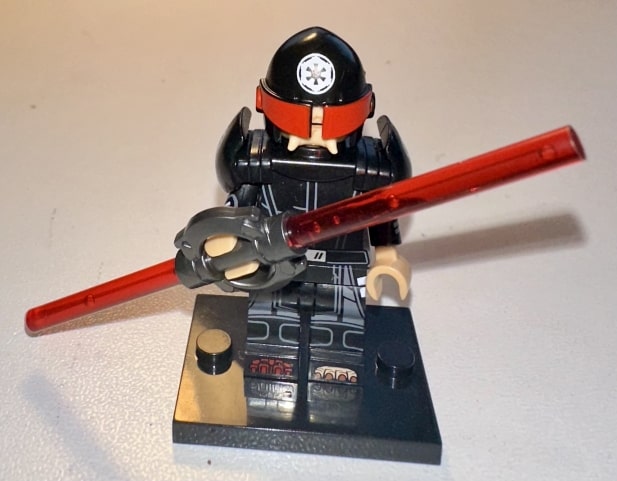 Imperial Inquisitors are the Empire’s dedicated Force hunters: dark side operatives trained to identify, pursue, and eliminate Jedi survivors and any Force-sensitive threats that might spark rebellion. They are not Sith Lords, and they rarely command fleets or rule worlds—but in the streets, in the ruins, and in the shadows of occupied cities, an Inquisitor is often the most terrifying Imperial presence a party can face. An Inquisitor combines martial skill, ruthless interrogation tactics, and weaponized fear with disciplined Force techniques designed for pursuit and control rather than grand duels.
In SWURPG, a DR 6 Inquisitor is built as a “baseline hunter” suitable for mid-to-high level campaigns: fast, hard to pin down, and punishing at close range. Their armor and lightsaber defense make them difficult to overwhelm with blasters, while their Force powers and intimidation tools pressure the party’s positioning and decisions. They don’t need massive damage numbers to be deadly—their real threat comes from tempo: forcing movement, denying safe cover, and turning one mistake into a cascading failure.
Lore-wise, Inquisitors typically operate under direct Imperial authority and are often supported by specialist troops—Purge Troopers, ISB agents, and elite storm units. They rarely arrive without context. If an Inquisitor is on-world, it means someone high up has decided the situation involves Jedi artifacts, hidden Force users, or a rebel network that won’t be contained by ordinary garrisons. Their methods are equal parts investigation and brutality: they squeeze local contacts, read fear in a crowd, bait heroes into revealing themselves, and then strike with speed.
This stat block represents a flexible, “generic” Inquisitor (DR 6) meant to fit many eras and storylines: a masked hunter stalking an urban district, a black-armored enforcer guarding a captured Force-sensitive, or a relentless pursuer boarding a freighter mid-flight. You can name them, assign a signature quirk (a code phrase, a favored intimidation tactic, a personal vendetta), and they instantly become a recurring villain.
Upgrading to Veteran (DR 7): Increase survivability and consistency, not just raw damage. Bump HP by roughly 15–25%, raise AC by +1 (or keep AC and add a small defensive trait), and improve Force Points by +5. Consider adding a second reaction option (such as a limited "Force Push" disengage), raising save DCs slightly, or granting Advantage on one saving throw type (Dex or Wis). Veteran Inquisitors should feel harder to shut down and more capable of surviving focused fire.
Upgrading to Grand (DR 8): Make them feel like a true campaign-tier hunter who controls the scene. Increase HP by another 20–30% over the Veteran version, raise Force Points by +5–10, and add one battlefield-control upgrade: stronger fear effects, a more punishing pursuit tool, or a limited multi-target Force technique. You can also grant them a tactical aura that enhances nearby Imperial allies (Purge Troopers or troopers within 30 ft), reinforcing the fantasy that an Inquisitor is not merely a duelist, but the spearpoint of an Imperial operation. Grand Inquisitors should change how the party plays, forcing them to plan, reposition, and commit resources to survive.
In SWURPG, Inquisitor units should be used in ways that highlight their role in the Imperial war machine. Consider how they enter the scene, what they are protecting, and how they react when the heroes disrupt their orders. They are most effective when placed in appropriate terrain, backed by officers or specialists, and used to create cinematic moments that feel true to the Star Wars universe.
Recommended Level Range: 8-16 | Difficulty Rating (DR): 6
Difficulty Rating (DR): 6
Type (Size): Humanoid (Medium)
Initiative: +7
AC: 19 (Inquisitor Armor (+4 AC, +4 max Dex bonus))
HP: 78 (12d8+24)
Speed: 30 ft.
Force Points: 20
Attributes:
STR 10 (+0), DEX 16 (+3), CON 14 (+2), INT 10 (+0), WIS 14 (+2), CHA 12 (+1)
Saves: DEX +7, CON +6, WIS +6
Skills: Acrobatics +7, Athletics +4, Perception +6, Insight +6, Intimidation +5, Stealth +7, Knowledge: Tactics +4, Use the Force +6
Languages: Basic
Equipment: Inquisitor Armor, Double-bladed lightsaber, Utility Belt, Binders, Datapad (Advanced)
Traits:
Force Hunter. The inquisitor has Advantage on Insight checks and on Perception checks made to spot hidden or disguised creatures.
Deflect and Redirect. When wielding an ignited lightsaber, the inquisitor can use its reaction to intercept incoming ranged energy attacks. Make a Use the Force check contested by the attack roll. On a success, the attack is negated (half damage against cannons, autofire, or Force Lightning). Each additional Deflect or Block attempt since the inquisitor’s last turn imposes a cumulative –2 penalty on further checks. When the inquisitor successfully Deflects, it may immediately redirect the attack toward another target within 30 feet as part of the same reaction, making a ranged attack using Dexterity or Wisdom (its choice). On a hit, the redirected attack deals half the weapon’s normal damage.
Relentless Pursuit. After the inquisitor hits a creature with a melee attack, it can move up to 10 feet without provoking opportunity attacks.
Dark Side Channeling (1/Short Rest). When the inquisitor would take damage, it can reduce that damage by half. In addition, once per Short Rest, the inquisitor can add one additional damage die to a melee attack it hits with.
Dual Wielder. The inquisitor suffers no penalty on attack rolls when fighting with two weapons.
Rapid Strike. When using a melee weapon with which it is proficient, the inquisitor may make a single attack roll with a –2 penalty. If the attack hits, it deals one additional damage die of the weapon’s normal damage type.
Lightsaber Throw. As an action, the inquisitor can spend 1 Force Point to hurl its ignited lightsaber up to 30 feet, making a ranged attack using Dexterity or Wisdom (its choice). On a hit, the attack deals normal lightsaber damage, and the weapon immediately returns to the inquisitor’s hand.
Lightsaber Defense. While wielding an ignited lightsaber, the inquisitor gains a +2 bonus to AC as long as it is not Incapacitated.
Actions:
Double-Bladed Lightsaber
(Melee Weapon Attack)
: +7 to hit,
range/reach 5 ft,
one target.
Hit: 13 (1d8/1d8+3) lightsaber damage
Force Powers: Force Push, Force Pull, Mind Trick, Force Leap, Fear, Force Corruption
An Inquisitor should feel like a predator, not a stationary boss. They use speed, angles, and pressure to keep heroes off-balance. Open the encounter by forcing hard choices: a fear effect to disrupt a frontliner, a Force power to punish clustered positioning, or a sudden close-range strike against the party’s most vulnerable target. The goal isn’t to trade hits—it’s to collapse the party’s formation and deny safe turns.
Inquisitors thrive in environments with verticality and line-of-sight breaks: hangar catwalks, refinery platforms, temple ruins, narrow alleys, starship corridors, or crowded marketplaces. Use those spaces. Make the party move. An Inquisitor who stays in the open and eats focused fire feels like a stat block; an Inquisitor who slips behind cover, rounds a corner, and appears where they’re not expected feels like Star Wars.
Deflect and Redirect is the signature moment. Use it to punish careless ranged attacks and to create cinematic reversals—especially if the party relies heavily on blasters. Don’t spam it; choose key shots that matter (a big hit, a crit, a heavy weapon) so it feels like a scene, not a tax. The redirect is also an excellent way to make allies matter: the Inquisitor can turn a hero’s shot into friendly fire pressure without needing extra actions.
Relentless Pursuit is your positioning engine: strike, then reposition. Use it to stay adjacent to high-value targets, to step out of melee threat zones, or to slide behind cover while keeping pressure on a wounded hero. Rapid Strike is for when you want a spike turn—use it when a hero is exposed, when the Inquisitor wants to force a down, or when you want to communicate that the duel is escalating.
Run the Inquisitor with supporting units whenever possible. One or two Purge Troopers or a pair of disciplined stormtroopers turns the encounter from a duel into an Imperial operation. The Inquisitor focuses on the party’s Force user (or the most mobile threat), while allies pin the rest down and deny easy retreats. If the party tries to flee, the Inquisitor doesn’t chase blindly—they cut off routes, lock down exits, and force the heroes to pay for every meter.
To explore more Imperial enemies, return to the Imperial Forces index and expand your roster with additional troopers, specialists, and leaders.