Star Wars Universe Roleplaying Game
The Next Generation of Star Wars Tabletop Adventure
The Next Generation of Star Wars Tabletop Adventure
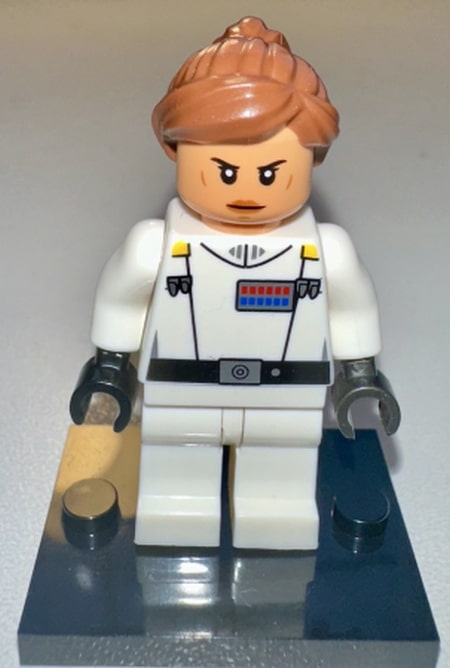 Imperial Fleet Admirals are the Empire’s strategic apex predators—high-ranking commanders entrusted with battle groups, sector-wide crackdowns, planetary invasions, and the suppression of rebellion at scale. They are not feared because they are unstoppable duelists. They are feared because they bring the full machinery of Imperial war to bear with cold precision, turning ordinary troopers into an organized killing force and converting terrain, timing, and morale into weapons.
In SWURPG campaigns, a Fleet Admiral is the ideal high-tier commander enemy for missions involving starports, shield generators, city occupation zones, convoy interdictions, and starship-linked operations. When an admiral is present, the heroes feel the difference immediately: troopers hold angles instead of panicking, reinforcements arrive with perfect timing, and escape routes get cut off like the admiral planned the entire fight hours ago.
A Fleet Admiral can appear on the battlefield for political reasons (to oversee a critical operation), personal ambition (to claim credit), or necessity (because the heroes have become a sector-level threat). Some admirals are brilliant traditionalists obsessed with doctrine and discipline; others are adaptive predators who learn the party’s habits and build traps around them. Either way, they excel at one thing: forcing the heroes to fight the Empire as a system rather than as a handful of enemies.
For Game Masters, the Fleet Admiral is best run as the command center of a multi-unit encounter. Pair the admiral with elite guards, layered cover, battlefield control terrain, and at least two different Imperial unit roles (for example: stormtroopers for firing lines plus a heavy trooper for area pressure). If the admiral is removed from play, the Imperial force should visibly weaken—bonuses drop, coordination breaks, and the encounter becomes dramatically more manageable. That contrast reinforces the fantasy: this is what leadership looks like in the Empire.
In SWURPG, Imperial Fleet Admiral units should be used in ways that highlight their role in the Imperial war machine. Consider how they enter the scene, what they are protecting, and how they react when the heroes disrupt their orders. They are most effective when placed in appropriate terrain, backed by officers or specialists, and used to create cinematic moments that feel true to the Star Wars universe.
Recommended Level Range: 10–18 | Difficulty Rating (DR): 7
Difficulty Rating (DR): 7
Type (Size): Humanoid (Medium)
Initiative: +6
AC: 12 (Imperial Admiral Uniform)
HP: 97 (15d8+30)
Speed: 30 ft.
Attributes:
STR 9 (-1), DEX 12 (+1), CON 14 (+2), INT 18 (+4), WIS 14 (+2), CHA 18 (+4)
Saves: INT +8, WIS +6, CHA +8
Skills: Knowledge: Tactics +10, Insight +6, Perception +6, Persuasion +8, Intimidation +8
Languages: Basic
Equipment: Imperial Admiral Uniform, Blaster Pistol, Datapad (Advanced)
Traits:
Strategic Foresight. The admiral cannot be surprised and has Advantage on Initiative rolls. In addition, once per round, the admiral may force a reroll of any attack roll made by a creature it can see.
Supreme Command Authority. All allied Imperial units within 60 feet of the admiral that can see or hear it gain a +2 bonus to attack rolls and saving throws. This bonus stacks with other command-based traits.
Adaptive Command Doctrine (2/Short Rest). At the start of any round, the admiral may choose one doctrine to apply until the start of its next turn: Assault (allied units deal +2 damage on hits), Suppression (enemies have Disadvantage on the first attack they make each round), or Maneuver (ground units may move up to 10 feet without provoking opportunity attacks and starships may take additional evasive maneuvers).
Heavy Fire Zone (1/Short Rest). As a Bonus Action, the admiral designates a 15 × 15 ft area within 60 ft. Until the start of the admiral’s next turn, the first time an enemy enters that area, one allied Imperial unit of the admiral’s choice may make an Attack of Opportunity against that enemy. This ability may be adapted for starship combat.
Executive Order (1/Long Rest). As an Action, the admiral authorizes a precision airstrike or orbital barrage at a point within 120 feet. The strike lands at the start of the admiral’s next turn. Creatures in a 30-foot radius must make a Dexterity saving throw (DC 16), taking 6d10 energy or explosive damage on a failure, or half damage on a success. This ability cannot be used indoors or where air or orbital support is unavailable.
Fleet-Level Authority. If the encounter takes place in a location with orbital or long-range Imperial support available, the admiral may call in one battlefield-wide effect once per encounter (reinforcements, suppression fire, extraction denial, or environmental hazard), at the GM’s discretion.
Betrayal (1/Long Rest). As an Action, the admiral targets one creature within 30 feet that can understand it and is not immune to charm effects. The admiral makes a Persuasion check contested by the target’s Wisdom saving throw (DC 16). On a success, the target immediately makes one attack as a free action against another creature of the admiral’s choice that it can see.
Actions:
Blaster Pistol
(Ranged Weapon Attack)
: +6 to hit,
range/reach 60 ft,
one target.
Hit: 6 (1d10) energy damage
A Fleet Admiral should almost never be alone. Their strength is leadership and battlefield control, so build encounters where allied units can benefit from their command aura and doctrines. Put the admiral in a protected position (raised catwalk, command dais, shuttle ramp, armored transport, or behind a disciplined firing line) and make the heroes earn access.
Open the encounter with Supreme Command Authority active and use Strategic Foresight to disrupt the party’s best early attack. If the heroes rely on a single high-damage striker, force a reroll on that critical hit attempt. If the party is spread out and pressuring multiple angles, select Maneuver doctrine to reposition troops safely and keep firing lanes clean.
Use Suppression doctrine when the heroes are about to surge—especially if they just took out a key trooper or moved into aggressive positions. Use Assault doctrine once the party is exposed, prone, or forced out of cover. Heavy Fire Zone works best to punish chokepoints, doorway pushes, ladder climbs, or cover-to-cover advances. If the battlefield includes vehicles or a starship component, call out that the admiral is coordinating fire arcs and maneuver timing even if you keep the mechanics simple.
Executive Order is not a casual nuke—treat it like a cinematic escalation. Telegraph it: the admiral calls coordinates, a comm officer confirms, and a shriek of incoming fire follows. It’s perfect for flushing entrenched heroes, denying an extraction point, or forcing a desperate reposition. If the fight is indoors or support is unavailable, lean harder on Fleet-Level Authority as a narrative lever: reinforcements seal exits, long-range fire pins routes, or a sudden environmental hazard turns the map into a problem.
Finally: play the admiral like an admiral. They don’t trade shots. They win by making the party’s decisions worse each round until the heroes either take them out or escape the trap.
To explore more Imperial enemies, return to the Imperial Forces index and expand your roster with additional troopers, specialists, and leaders.