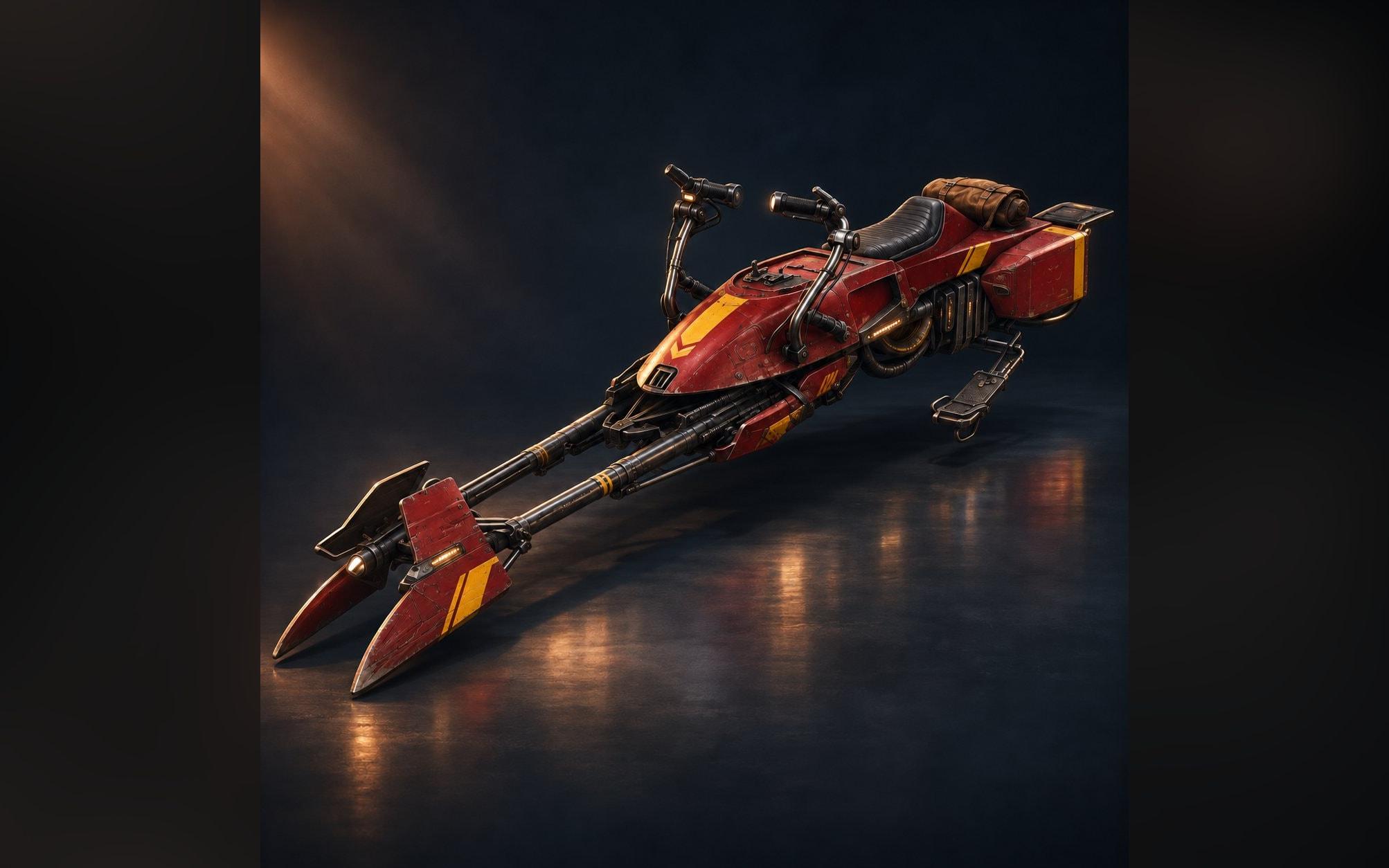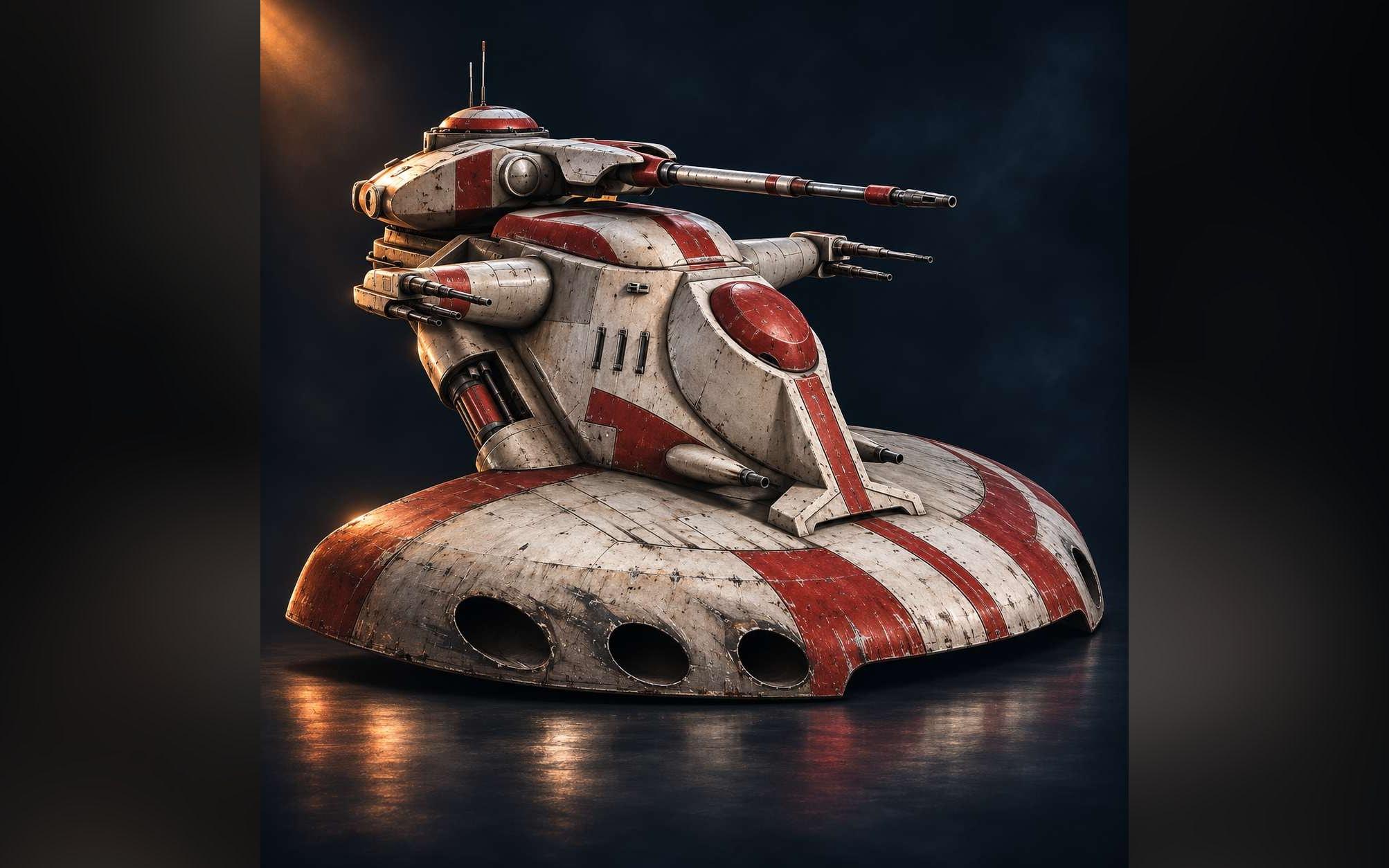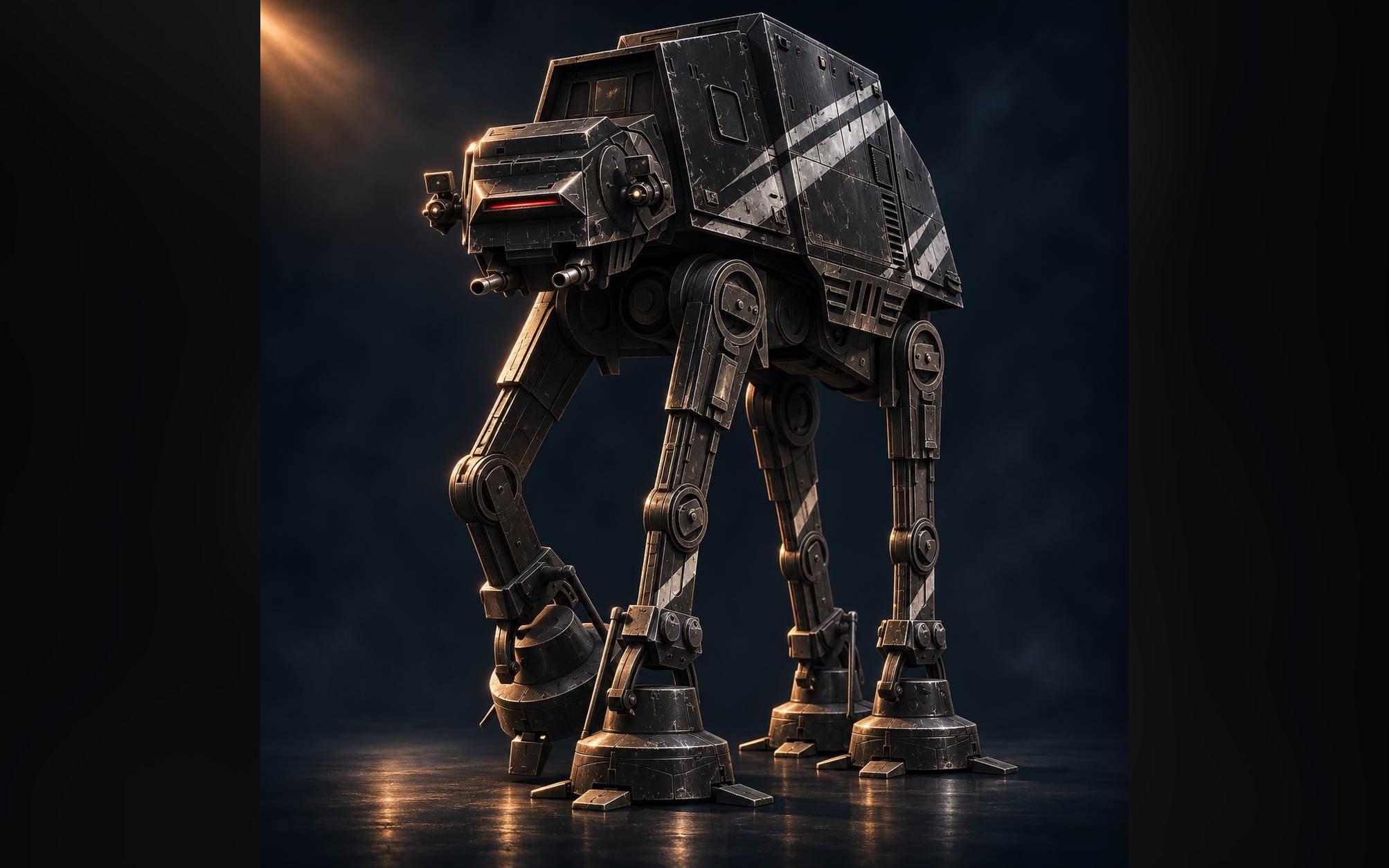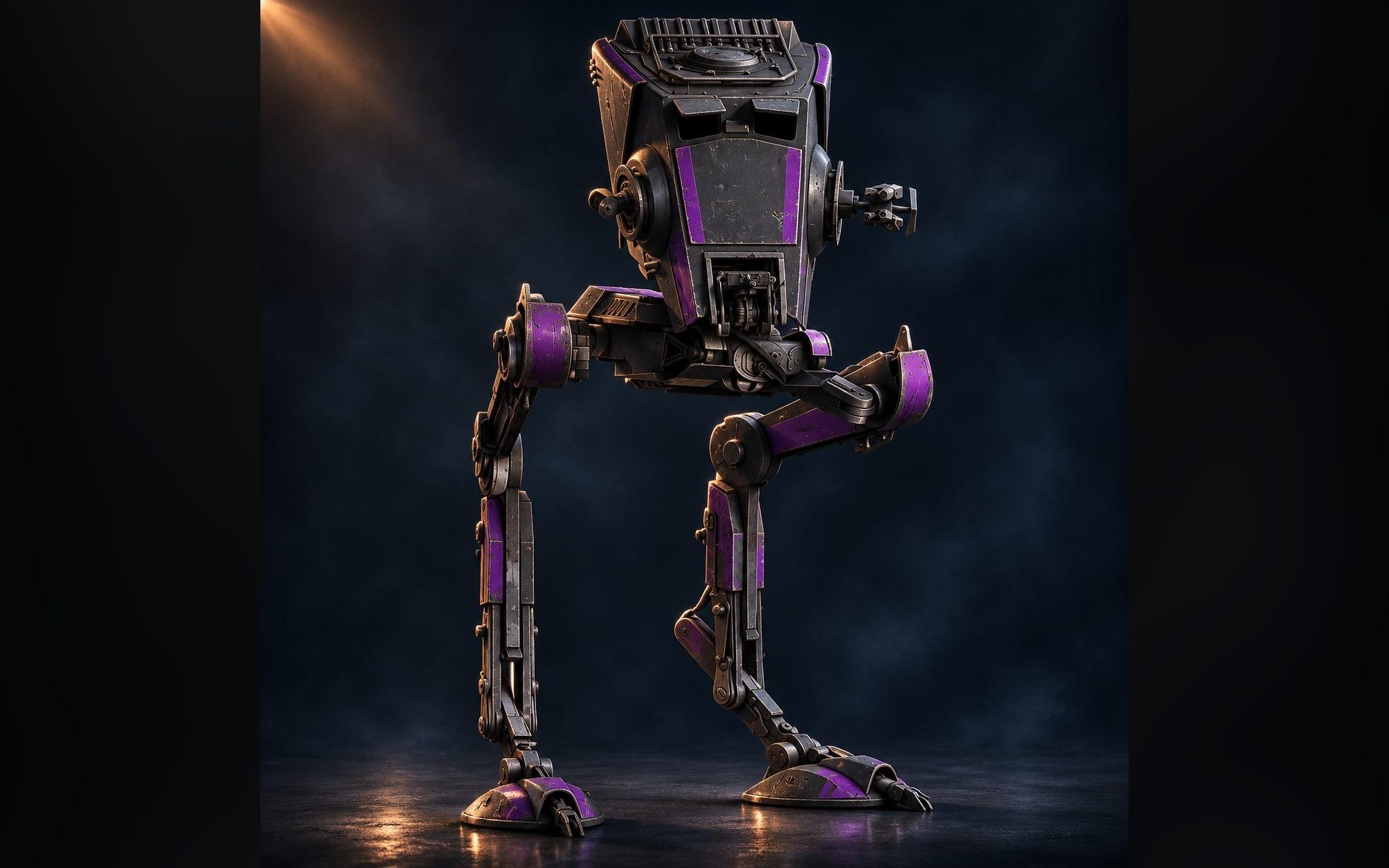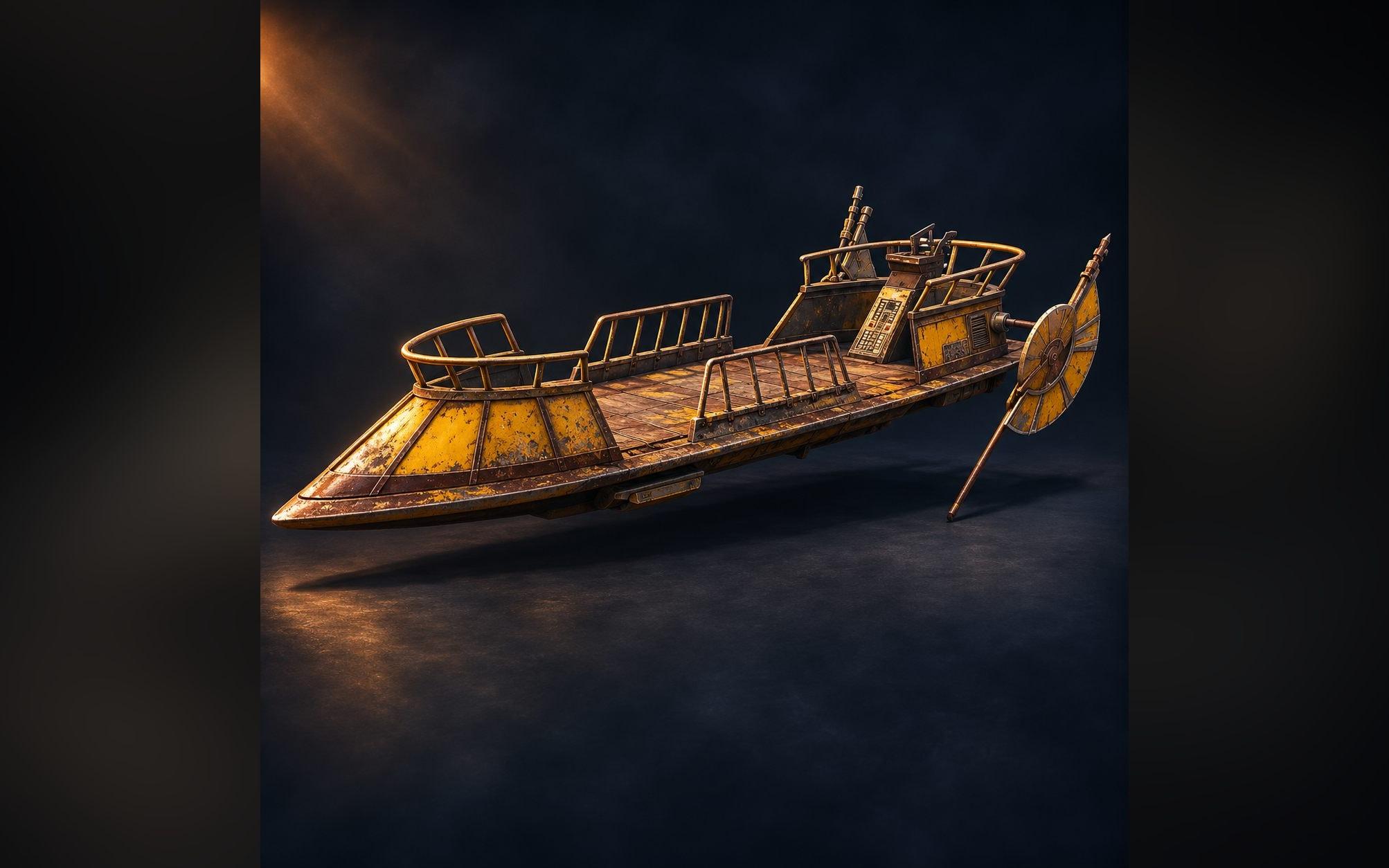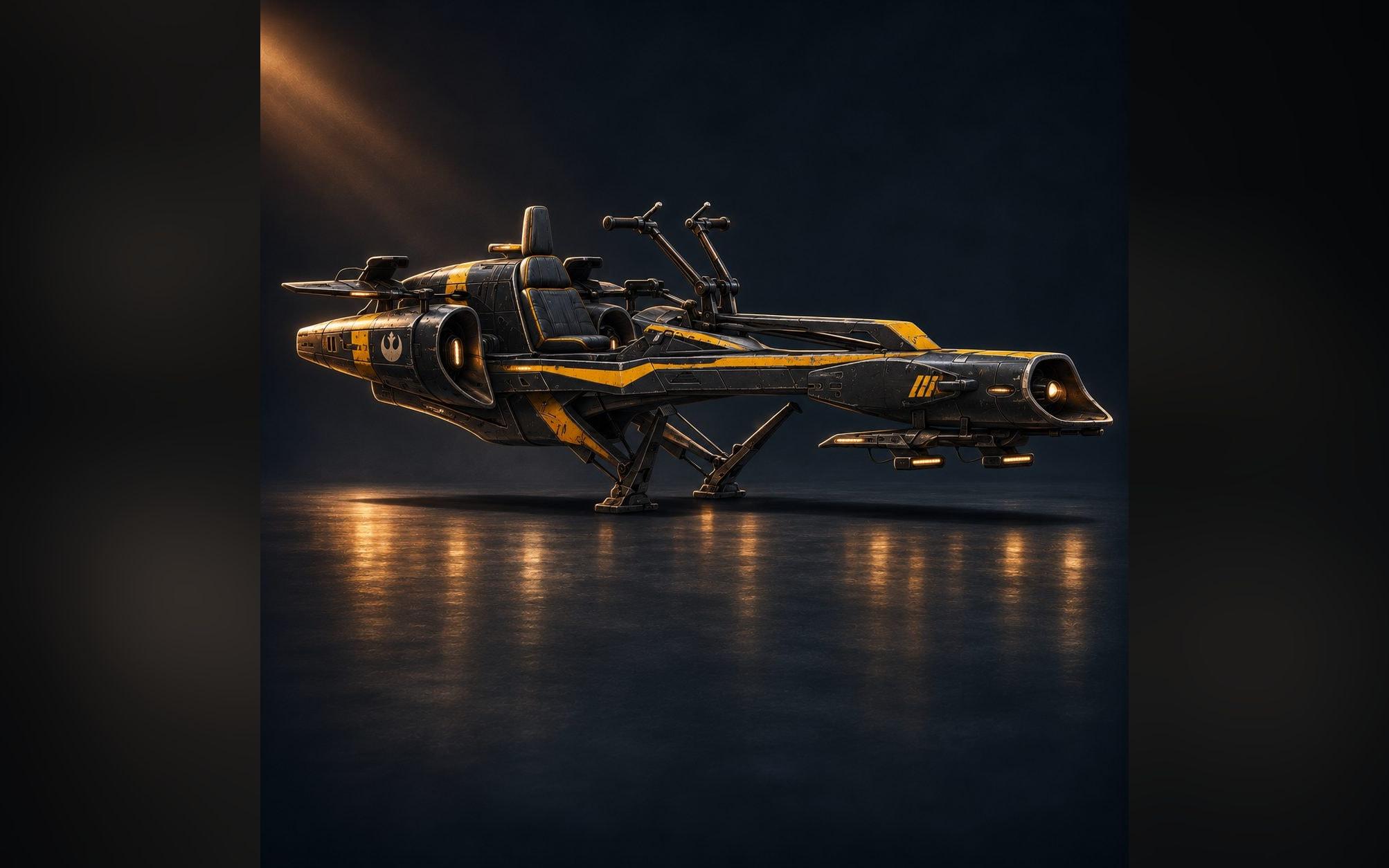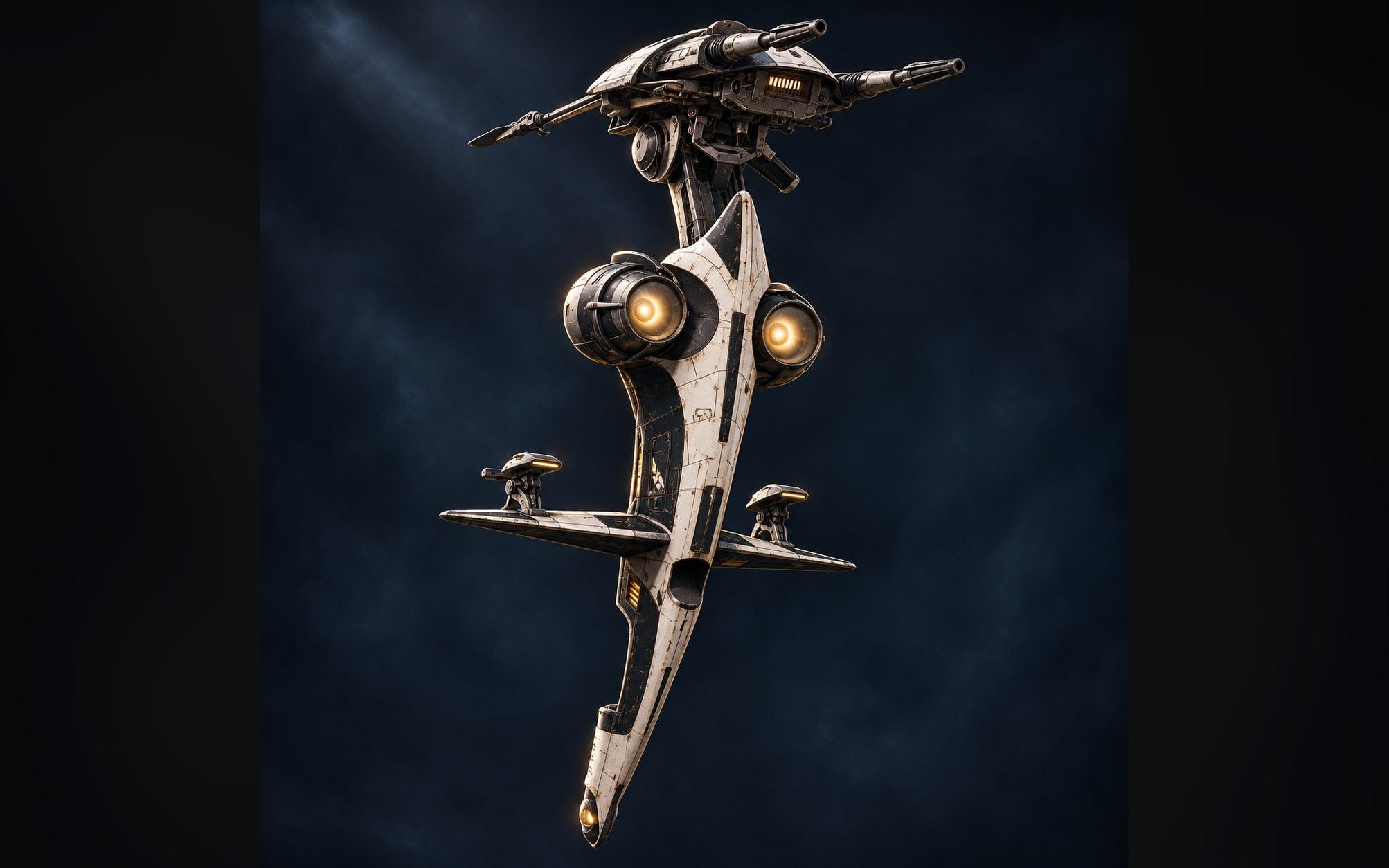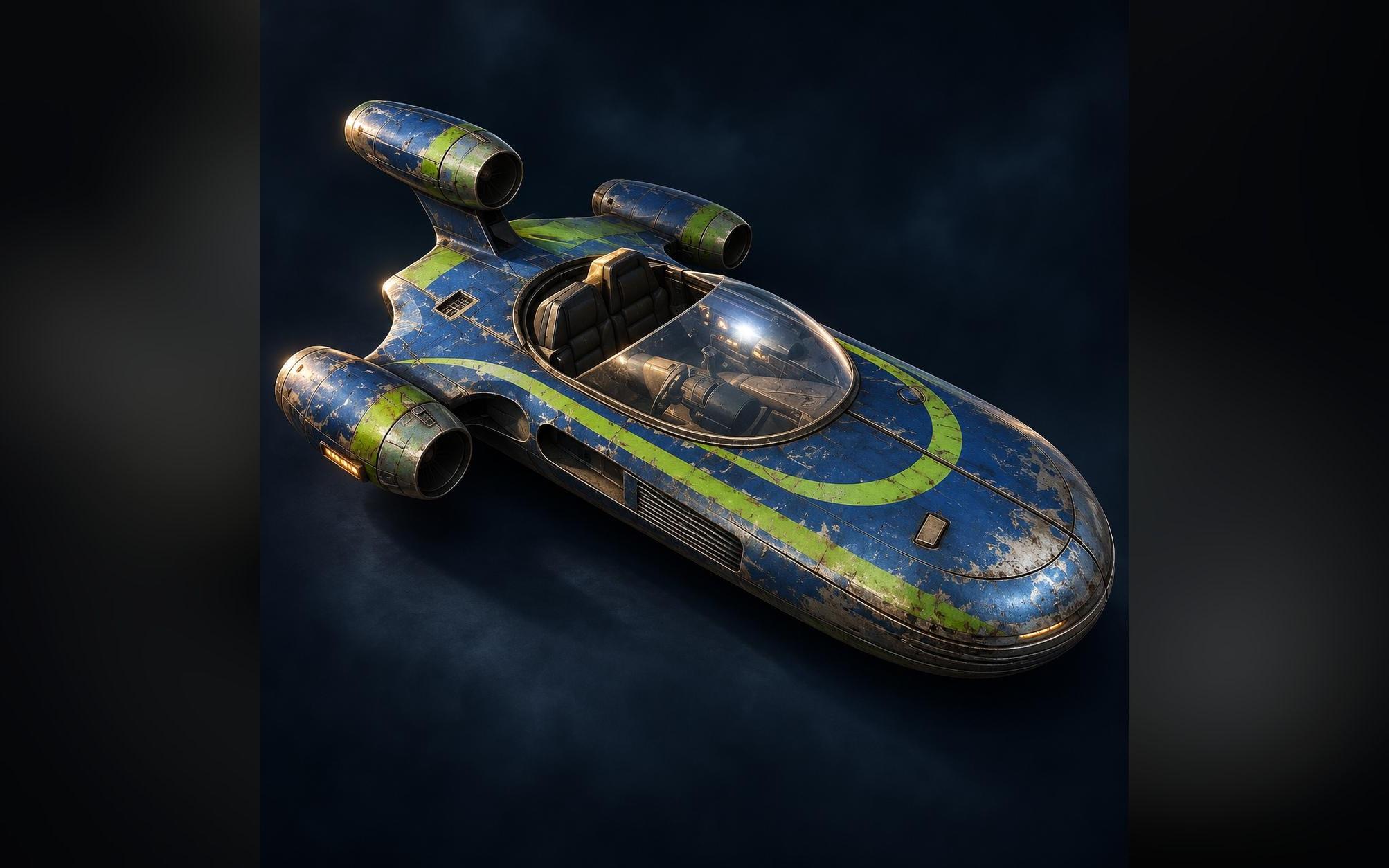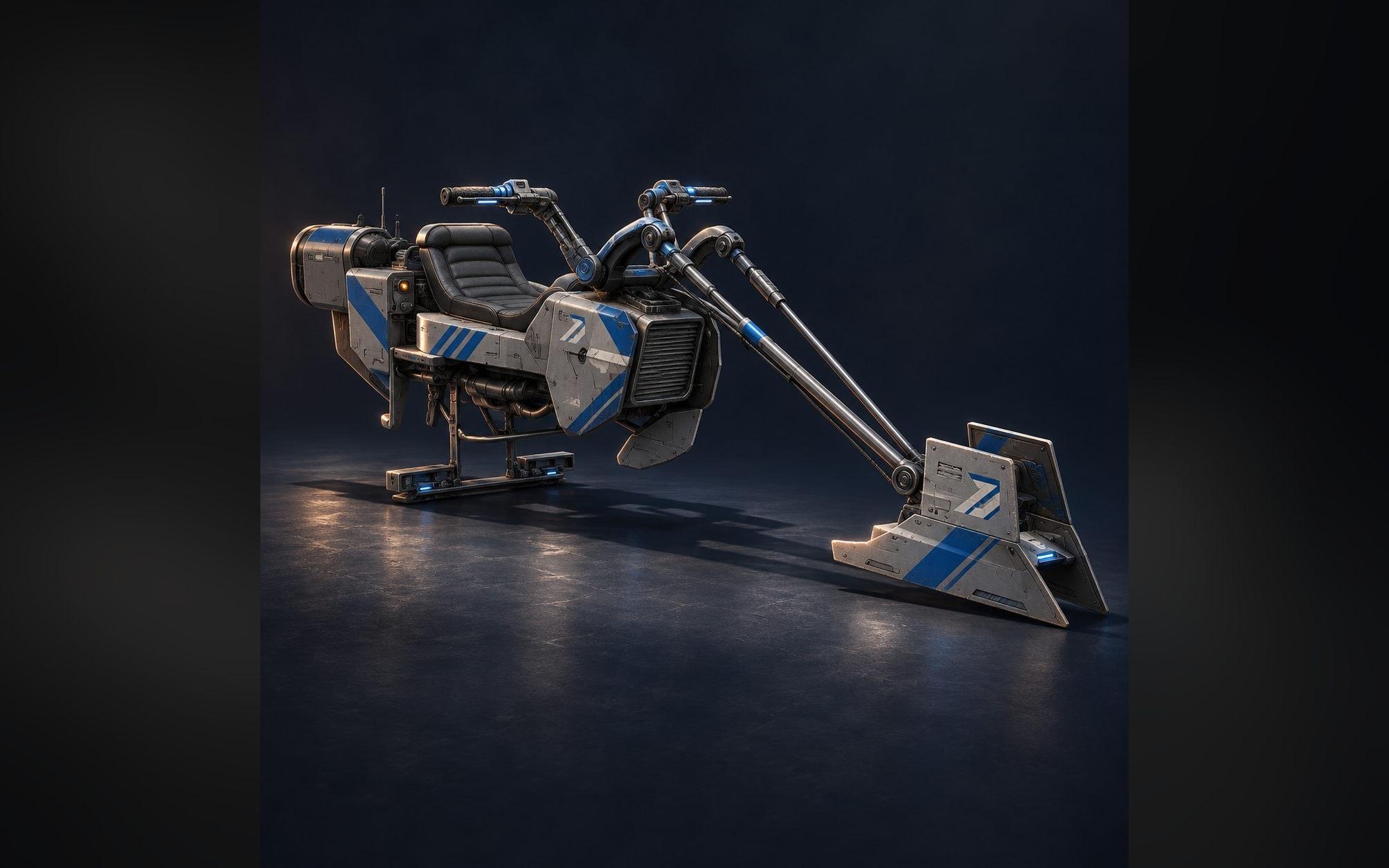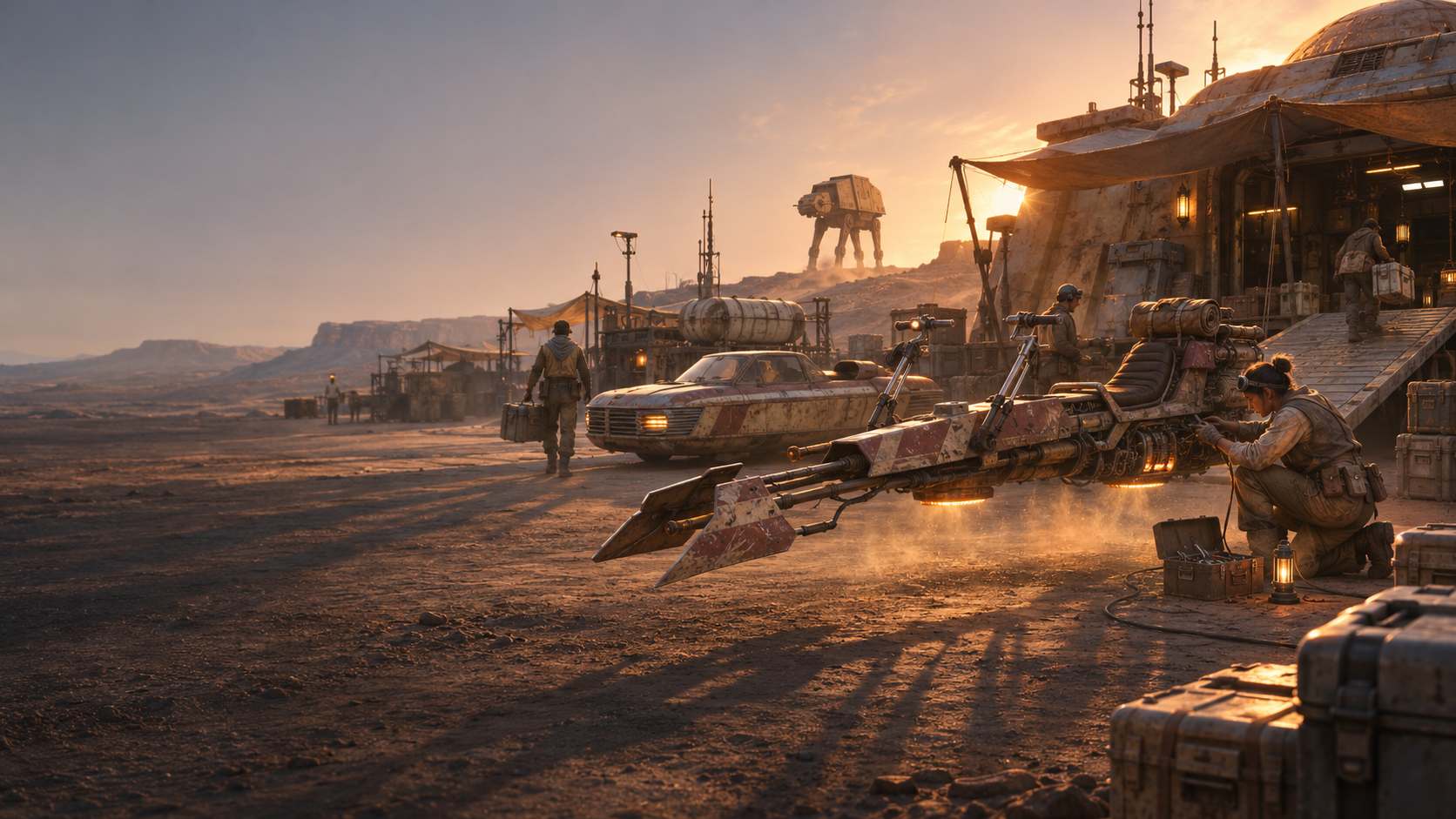
A ground vehicle is anything your party rides across a battlefield rather than flies between planets — a speeder bike, a swoop, a landspeeder, a cargo skiff, a walker, a tank. Vehicles share a grid with characters and get shot at by character weapons, which is what separates them from starships and drives almost every design decision on this page.
New to vehicles in SWURPG? Read the Vehicles and Mounted Combat rules first — riding, Full Throttle, ramming, hazards, staying in the saddle, and living mounts. This page is the catalog's companion, not a replacement for it.
How a vehicle stat block reads
Every vehicle carries the same fields:
| Line | What it means |
|---|---|
| Speed | Replaces the rider's Speed while riding. In feet, like any other Speed. |
| Handling | The chassis's contribution to AC, and to any Pilot check made with it. |
| Armor Bonus | Plating, as an AC contribution. |
| HP | The vehicle's own hit points, entirely separate from the rider's. |
| Damage Resistance | Flat reduction on every hit the vehicle takes. |
| Rider Cover | +0, +2 or +5 AC to everyone aboard, set by the chassis. |
| Crew Stations | 1 station is one rider. 2 or more means crew roles. |
AC is derived, never stored:
Vehicle AC = 10 + Handling Bonus + Size Modifier + Armor Bonus
That Size Modifier comes from the ground table — Large −1, Huge −2, Gargantuan −3, the same one every creature uses. It is not the starship table, which runs −2 / −4 / −6. Reading an AT-ST off the starship numbers would land it near AC 6, which is nonsense for something standing on a battle map next to your characters.
Armor is Damage Resistance, not a higher AC
This is the part that surprises people, so it is worth stating flatly: AC barely moves across this entire catalog. The range from the flimsiest swoop to an AT-AT is 9 to 14. A walker is not meaningfully harder to hit than a speeder bike.
What changes is whether hitting it accomplishes anything. Vehicles use Damage Resistance X (Flat) — subtract X from every incoming hit, minimum zero — and that number runs from 0 to 18 across the catalog. A swoop at Damage Resistance 0 dies to blaster fire like anything else. An AT-AT at Damage Resistance 18 cannot be hurt by small arms at all: the heaviest personal weapon in the catalog averages 16 and bounces off, every time, no matter how many rounds your party spends on it.
If that sounds familiar, it is the Battle of Hoth. The snowspeeders could not shoot the walkers down, so they used tow cables.
Ion is the exception, and that is the whole point. Ion damage ignores a vehicle's Damage Resistance entirely. An ion weapon is a real answer to an armored vehicle in a way a blaster rifle never will be — which is exactly how it works everywhere else in the galaxy, and why the Ion damage type finally has a job.
So when you look at a GM-side vehicle and think "we can take that," check the Damage Resistance before the AC. The AC tells you whether you connect. The Damage Resistance tells you whether it matters.
Riding costs nothing
There is no vehicle proficiency. No trait to spend, no training gate, no trained-versus-untrained split. Anyone can get on a speeder bike and ride it. Pilot is the skill for doing it well — hard turns at speed, hazards, a swoop grabbed off a rack mid-chase — and a character without Pilot proficiency just rolls without the bonus.
The vehicle's Speed replaces yours, and riding costs no part of your turn. You keep your Action, your Bonus Action and your Reaction. You are a character who moves faster, not one who traded something away for the privilege. Firing from a moving vehicle at cruising speed carries no penalty either.
The one thing that does cost you is Full Throttle: an Action to move double the vehicle's Speed, at the price of Disadvantage on every Pilot check, hazard check and attack until your next turn. Burning your Action to cover ground means you are not shooting, and the terrain stops forgiving you at the worst possible moment. That is the real decision a vehicle puts in front of a player.
Cover comes from the chassis
Everyone aboard gets the vehicle's Rider Cover value. It is printed in the stat block so it never has to be argued about at the table:
- +0 — open frame, you are sitting in the air: speeder bike, swoop, STAP, open skiff
- +2 — cowled or half-enclosed: a landspeeder with a windscreen
- +5 — fully enclosed, firing from inside: heavy walker, tank, armored transport
Terrain cover stacks on top of this and works the ordinary way. A rider who pulls in behind a rock outcropping gets the rock's bonus as well as the chassis's.
One thing worth keeping straight: a living mount gives +0. You sit on a dewback, not behind it, which makes you higher and more visible rather than safer. What a mount actually does for you is soak attacks by being a second target worth shooting — and target selection is not a cover bonus. Those two get confused constantly; they are not the same thing.
One station, or a crew
A vehicle with a single crew station is ridden by one character using the ordinary action economy above. A vehicle with two or more stations uses the crew roles from starship combat — Pilot, Gunner, Engineer, Commander — with range bands read as street blocks instead of kilometers.
That single seam is what lets a speeder bike and a four-crew walker run on the same system without a second rulebook.
Picking one for your party
Two steps, and the first one matters more:
- Match the crew stations to your table. A scout or a lone courier wants a one-station bike — fast, exposed, no coordination overhead. A party that wants to fight from a vehicle wants enough stations that more than one player has something to do on their turn.
- Match the chassis to the job. Speed and exposure trade off against each other almost perfectly here. The fastest things in the catalog have the least armor and +0 Rider Cover; the things that shrug off fire crawl.
Three reasonable starting points:
- 74-Z Speeder Bike — 100 ft of Speed for one rider, and the one the scout troopers chased Luke and Leia on at Endor. Open frame, so you are quick and you are a target.
- X-34 Landspeeder — Luke's. Slower, but a windscreen gets you +2 Rider Cover and it carries the party's gear.
- Bantha-II Cargo Skiff — the Great Pit of Carkoon skiff. Slow, Huge, and a moving platform the whole party can fight from.
Playable and GM-side
The catalog is split the same way the bestiary is. Playable vehicles are the ones your party rides. GM-side entries carry a Threat Rating, tactical notes and adventure hooks, and exist to be pointed at the party — the AT-ST, the AAT, the AT-AT, the STAP-1. Filter by Player or GM in the grid above.
An AT-AT is not a party vehicle, and that is deliberate rather than an oversight. It is a set-piece: something a party works around, climbs, disables or runs from, not something they requisition.
Prices are reference only
Every vehicle carries a reference price in credits, and there is no credit pool to spend down. Prices exist so a GM can sanity-check whether a party plausibly has access to something. Whether they can actually afford or acquire it is a story decision, not an accounting one.
There is no vehicle builder
Starships have the Starship Builder; vehicles do not have an equivalent, and nothing is hidden behind one. A vehicle has no upgrades, no traits and no levels — the stat block on each page is the whole thing. Note the numbers on your character sheet and ride.
Full mechanics live in the Vehicles and Mounted Combat rules.